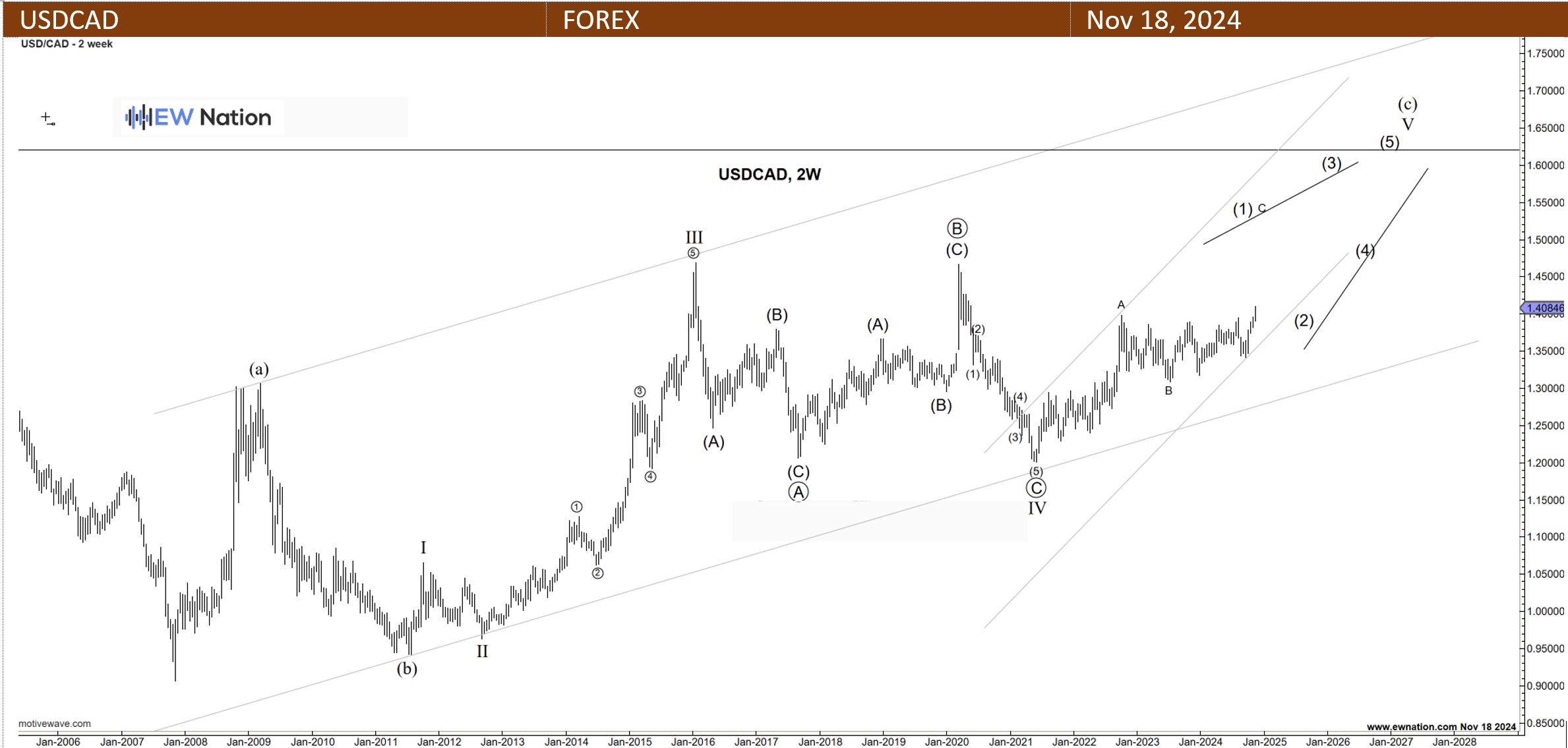
The Elliot Wave chart above shows that USDCAD is testing a significant resistance region, a break of this region will open up a challenge of the wave C top (1.46 USD). An A-B-C pattern unfolding towards a potential ending diagonal (1)-(2)-(3)-(4)-(5) potentially testing or targeting 0.786 region of the 2002 high of 1.61 USD.
USDCAD
Updated: 11/18/2024 4:32 AM
Click Image To Enlarge
The Canadian dollar weakened toward 1.4 per USD, the lowest level since May 2020, amid a broader wave of US dollar buying, slumping oil prices, and concerns about Chinese growth. The dollar has strengthened due to market expectations surrounding the return of Trump, amid inflationary policies that could limit the Fed’s ability to lower interest rates.
Additionally, proposed sanctions on imports to the US heightened concerns about reduced demand for Canadian exports to its main trading partner. At the same time, foreign demand for the loonie has dwindled as oil prices declined and the demand outlook from top importer China weakened following disappointing economic data and stimulus measures.
Meanwhile, Canada’s economy showed resilience, with a lower-than-expected unemployment rate and positive PMI data, moderating expectations for significant rate cuts by the BoC and limiting the CAD’s decline.
Click Image To Enlarge
The Elliot Wave chart above shows that USDCAD is testing a significant resistance region, a break of this region will open up a challenge of the wave C top (1.46 USD). An A-B-C pattern unfolding towards a potential ending diagonal (1)-(2)-(3)-(4)-(5) potentially testing or targeting 0.786 region of the 2002 high of 1.61 USD.