Bottom Line: Higher to complete wave III
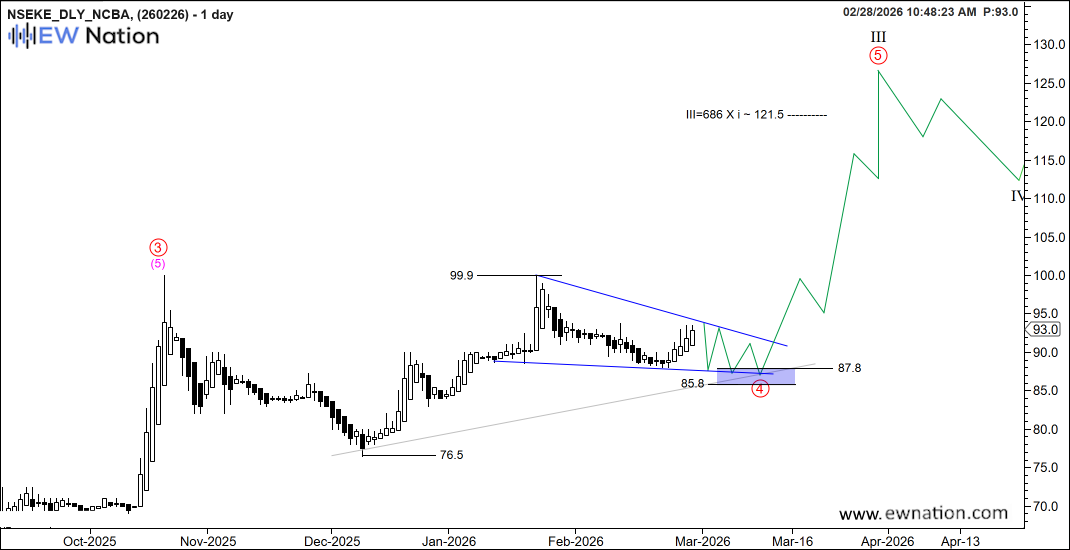
2/23/26 05:55 EST (Last Price 93):
We are looking for evidence that wave 4 is complete such as a five wave advance above 99. We anticipate a further test of 87 region before advance.
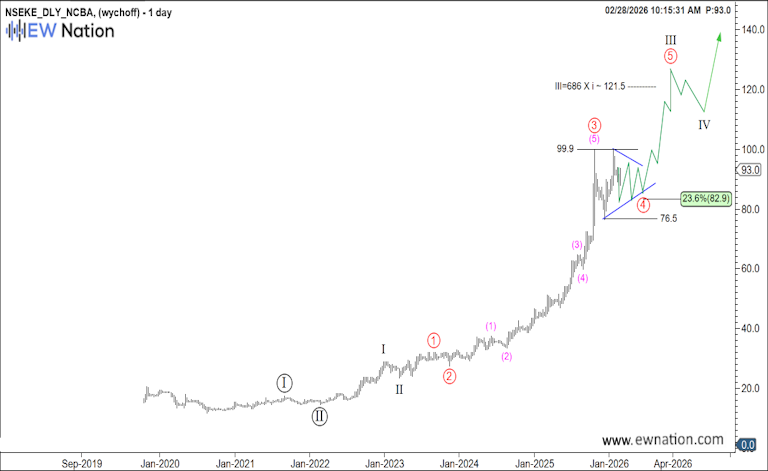
2/23/26 05:55 EST (Last Price 93):
We are looking for a wave 5 completion, we anticipate a short run once 430 key level is broken for wave 5. Thereafter, wave 4 deline setting stage for wave 5.
Summary
Across Africa, traditional banking has leapfrogged into mobile-first financial services. Digital lending — instant, app-based loans delivered via mobile phones — is reshaping how banks grow, manage risk, and serve customers.
Africa’s banking environment differs from developed markets in key ways:
High mobile penetration
Large underbanked population
Informal income structures
Limited physical branch access in rural regions
Digital lending solves these constraints by using:
Mobile phone data
Transaction histories
Alternative credit scoring models
This enables near-instant credit decisions — often in minutes.
NCBA Group PLC offers a compelling case study of how digital transformation can drive both financial inclusion and profitability.
NCBA Earnings & Growth Data (2024–2025)
🔹 Full-Year 2024 Results
Profit after tax: KES 21.9 billion (up ~2% YoY).
Operating income: KES 62.7 billion.
Operating expenses: KES 32.2 billion (up ~10.6% YoY).
Final dividend: KES 3.25/share (KES 5.50 total).
NPL ratio: 11.2% of total loans.
Impairment coverage: ~60%.
These numbers show steady profitability with disciplined credit provisioning — a sign of strength in a challenging operating environment.
Digital Lending as a Growth Engine
Digital Loans Disbursements
Full Year 2024: > KES 1 trillion in digital loans disbursed; up ~+23% vs prior year.
H1 2025: KES 646 billion digital loans, +35% YoY growth.
Q1 2025: KES 307 billion digital disbursements, +32% YoY.
Q3 2025: Digital lending remained above KES 1 trillion, up ~35% YoY.
Insight: Digital lending now accounts for a substantial share of NCBA’s loan book growth and customer engagement. The Y-o-Y increases indicate rapid adoption among retail and business borrowers.